
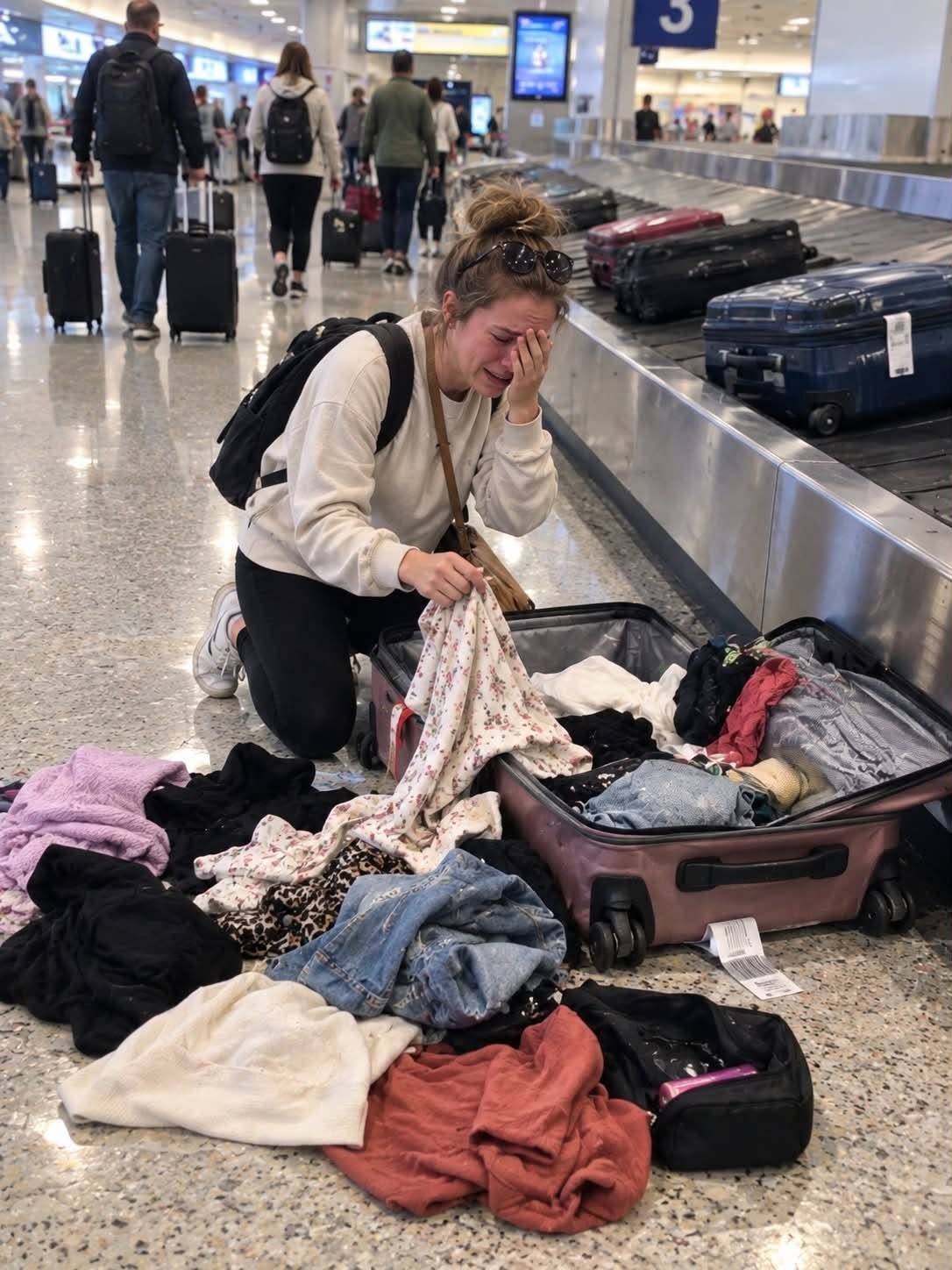
I thought the story of James was finished.
I thought we had survived the worst night of our lives, that the gas leak had been repaired, that my family had finally learned what it meant to show up, and that I could slowly begin building a life without the man I had loved for eleven years.
I was wrong.
Because three weeks after returning from Portugal, I received a phone call that made me realize James had left behind something far more important than the emergency system that saved fourteen families.
He had left behind a secret.
And that secret would eventually bring me face-to-face with the people who had ignored his warnings before he died.
It happened on a Thursday morning.
I was standing in the kitchen, making coffee. The house was beginning to feel familiar again. My father’s repaired porch light shone through the window, and the little green alarm panel beside the front door continued glowing softly.
I had just poured my coffee when my phone rang.
The number was unfamiliar.
Normally, I would have ignored it.
But something made me answer.
“Hello?”
“Am I speaking with Mrs. Amelia Whitaker?”
“Yes.”
“My name is Daniel Foster. I’m calling from the Portland municipal building safety office. I worked with your husband.”
I immediately gripped the counter.
“James?”
There was a brief silence.
“Yes, ma’am. James.”
I sat down.
“Is something wrong?”
“No. Well, not exactly. I’m calling because we recently received some documents connected to his formal complaint about the gas main. During the investigation, we discovered that your husband had submitted more than the three complaints you mentioned to the fire captain.”
I frowned.
“What do you mean?”
“We found six reports. Some were submitted months before the incident.”
Six.
I knew about three.
James had never told me about the others.
“Mrs. Whitaker, there’s another reason I’m calling. Your husband requested that certain documents be delivered to you personally if anything happened to him before the investigation was completed.”
My coffee suddenly tasted bitter.
“What documents?”
“A sealed envelope. He left it with our department’s legal office.”
I closed my eyes.
James.
Even after everything, he was still preparing for something I hadn’t anticipated.
“Can I come and collect it?”
“Of course. But there’s something you should know. Your husband’s final report names several people who may have ignored serious safety concerns.”
I sat completely still.
“Who?”
“I’d rather explain when you arrive.”
The call ended.
For several minutes, I remained at the kitchen table.
Then I looked at the alarm panel.
Its green light was steady.
I whispered, “What were you doing, James?”
I drove downtown that afternoon.
The municipal building was one of those gray government buildings that looked as though nobody had updated its furniture since the 1980s.
Daniel Foster met me in the lobby.
He was a thin man in his early forties, wearing a navy suit and carrying a folder.
“I’m sorry for your loss,” he said.
“Thank you.”
He led me to a small conference room.
There was a man already waiting inside.
He introduced himself as Martin Keller, an attorney representing the city during the gas-main investigation.
On the table sat a thick brown envelope.
My husband’s handwriting was on the front.
AMELIA — OPEN ONLY WHEN YOU FEEL READY.
I recognized every letter.
The way he made the A slightly crooked.
The way he pressed too hard on the final stroke of his name.
My throat tightened.
“Did you read it?” I asked.
Martin shook his head.
“No. We respected his instructions. The envelope is yours.”
I reached for it.
My hands trembled.
Inside was a handwritten letter, several printed reports, photographs, and a small USB drive.
I unfolded the letter first.
“Amelia,
If you’re reading this, something happened before I could finish what I started.
First, please don’t blame yourself.
You always worry that you should have noticed things sooner. You didn’t need to notice anything. That was my responsibility, not yours.
Second, remember what I told you about the house in the side yard. Sometimes the problem isn’t where everybody is looking.
I’ve been investigating something for a while.
I didn’t tell you because I didn’t want you worrying about things you couldn’t control.
But now I need you to know.
I love you.
James.”
I stopped reading.
I pressed the letter against my chest.
Daniel quietly slid a box of tissues toward me.
I wiped my eyes and continued examining the documents.
The first report concerned the gas smell near our street.
The second included photographs of corroded pipes.
The third contained a list of dates when James had contacted the utility company.
But the fourth document made my stomach turn.
It was an internal maintenance record.
A section of the gas main had been flagged for replacement more than a year earlier.
The work had been postponed.
Then postponed again.
And again.
At the bottom was a handwritten note:
“Monitor only. Replacement costs exceed current allocation.”
I looked up.
“Are you telling me they knew?”
Daniel folded his hands.
“We’re still investigating exactly who knew what and when. But the documentation raises serious questions.”
“Fourteen families were living above that pipe.”
“Yes.”
“And my husband was trying to warn them?”
“Yes.”
I looked down again.
There was another document.
This one contained a photograph of James standing beside a section of exposed pipe.
On the back, he had written:
“People live above this. Someone needs to remember that.”
I couldn’t stop crying.
He had been carrying this burden while I complained that he spent too much time checking the basement.
I had thought he was being overly cautious.
Now I understood.
When I returned home, Troy was waiting on the porch.
He stood beside his truck holding two bags of groceries.
“Hey,” he said.
“Hey.”
“You okay?”
I hesitated.
“Not really.”
He immediately put the groceries down.
“What’s happened?”
I told him about the phone call, the documents, and the investigation.
His expression changed.
“Amelia, are you saying the gas company knew about the problem?”
“They knew the pipe needed attention. We don’t know who made the final decisions.”
Troy rubbed his forehead.
“That’s unbelievable.”
I looked at him.
“James spent months trying to get somebody to listen.”
Troy lowered his eyes.
Then he said something I wasn’t expecting.
“I wish I’d listened to him more.”
I stared at my brother.
“What do you mean?”
Troy swallowed.
“About two months before the trip, James called me.”
I frowned.
“He did?”
“Yeah. He asked whether I knew anyone who worked in city administration. Someone who could help him understand why his reports weren’t being taken seriously.”
“Why didn’t you tell me?”
“Because I didn’t think it was important.”
He paused.
“Actually, that’s not the whole truth. I was busy. I told him I’d look into it, but I never did.”
I sat down on the porch steps.
Troy joined me.
“Do you know what he said when I apologized?”
I shook my head.
“He told me not to worry. He said he knew I had a lot going on.”
Troy stared at the street.
“He always made things easy for everybody, didn’t he?”
I nodded.
“Even when things were difficult for him.”
We sat quietly for a while.
Then Troy reached into his jacket and handed me a small photograph.
It showed James and Troy standing beside a barbecue grill in our backyard.
They were laughing.
I had taken that photograph two summers earlier.
“I found it in my office,” Troy said. “I want you to have it.”
I looked at the picture.
James had his arm around my brother’s shoulders.
Both of them were smiling.
I started crying again.
Troy put his arm around me.
For the first time in months, I didn’t feel like I had to pretend I was okay.
That evening, I inserted the USB drive into my laptop.
I expected to find technical reports.
Instead, a folder appeared on the screen.
Its name was:
FOR AMELIA.
Inside were twelve audio recordings.
I clicked the first one.
James’s voice filled the kitchen.
“Testing. One, two. Okay. This is probably ridiculous, but if you’re listening to this, Amelia, it means I didn’t get around to deleting these files.”
I laughed through my tears.
It sounded exactly like him.
He continued.
“I wanted to make a few recordings because you always tell me I forget things. Which is unfair. I remember almost everything. Except where I put my keys.”
I smiled.
Then his voice became softer.
“There’s something I’ve been meaning to tell you.”
I leaned closer to the screen.
“I know you’ve been worried about money lately. I know the house needs repairs, and I know you hate how much I’ve been spending on inspections and safety equipment.”
I shook my head.
He had remembered that conversation.
“I want you to know that I’ve been putting a little money aside. Nothing extraordinary. Just enough to make sure you won’t have to worry about the mortgage if something happens to me.”
I covered my mouth.
There was more.
“I also updated the insurance paperwork. Everything is in the folder marked HOUSE. Don’t let anybody convince you that you need to sign anything without reading it.”
I paused the recording.
That last sentence sounded unusually serious.
I opened the folder marked HOUSE.
Inside were copies of insurance documents, mortgage information, account details, and a list of trusted professionals.
At the bottom was another folder.
It was titled:
IF THE COMPANY CALLS.
I clicked it.
There were scanned letters, photographs, and a spreadsheet.
The spreadsheet listed every complaint James had submitted, every response he had received, and the dates when the utility company had closed each case.
But one entry was different.
It had been highlighted in yellow.
DATE: THREE DAYS BEFORE DEPARTURE.
STATUS: CLOSED.
COMMENTS: CUSTOMER ADVISED NO FURTHER ACTION REQUIRED.
I stared at the screen.
Three days before our trip.
James had been told there was no further action required.
Yet he had still installed the alarm system.
He had still put my family on the emergency contact list.
And he had still gone to Portugal with me, smiling, talking about bread and rivers and doing nothing.
I pressed play on the second recording.
“Amelia, there’s one more thing.”
His voice became serious.
“If the gas company ever contacts you about compensation or asks you to sign a statement, please don’t rush. Get independent advice first. I don’t want you getting caught in something you don’t understand.”
I stopped breathing for a moment.
Compensation?
What compensation?
I opened the next folder.
There was an email from a law firm.
It had been sent to James four days before he died.
The subject line read:
REQUEST FOR MEETING — MUNICIPAL SAFETY LIABILITY REVIEW.
I read the message twice.
The law firm had been investigating a series of complaints involving delayed infrastructure repairs.
James had apparently been asked to provide technical evidence.
At the bottom of the email was a sentence that made my blood run cold.
“Your documentation may be central to determining whether the utility provider failed to respond appropriately to repeated warnings.”
I leaned back in my chair.
James hadn’t just been worried about our house.
He had been trying to protect an entire neighborhood.
And now I was holding the evidence.
The next morning, my mother arrived with breakfast.
She had been calling every day since the gas incident.
Sometimes we talked for ten minutes.
Sometimes for an hour.
She still wasn’t perfect.
Neither was I.
But things were changing.
“Good morning, sweetheart,” she said, placing a paper bag on the counter.
“I brought those cinnamon rolls you like.”
“Thanks, Mom.”
She noticed the documents spread across the kitchen table.
“What’s all this?”
I explained what Daniel had told me.
My mother’s face grew pale.
“James was investigating the gas company?”
“Yes.”
She sat down slowly.
“Why didn’t he tell us?”
I looked at her.
“He tried to tell people. They didn’t listen.”
She lowered her eyes.
Then she picked up one of the photographs.
“Your husband was a good man.”
“He was.”
“I should have known.”
I didn’t answer.
She continued.
“I keep thinking about that night. About the alarm calls. About how I was sitting at the Hendersons’ table while you were in danger.”
“Mom—”
“No. Let me finish.”
Her voice broke.
“I keep replaying it. If I’d answered the phone, maybe I could have helped sooner. If I’d picked you up, maybe you wouldn’t have been alone in that house.”
I reached across the table and took her hand.
“Mom, the gas leak wasn’t your fault.”
“But leaving you alone was.”
I looked at her.
For the first time, she wasn’t trying to explain her behavior.
She wasn’t blaming the schedule.
She wasn’t reminding me how busy everyone had been.
She was accepting what she had done.
And somehow, that hurt more than any argument.
“I can’t change that night,” she whispered.
“No,” I said. “But you can change what happens next.”
She nodded.
Then she asked, “What are you going to do with those documents?”
I looked at the photograph of James beside the exposed pipe.
“I’m going to make sure people know what he was trying to tell them.”
My mother squeezed my hand.
“Then I’ll help you.”
Two days later, the city announced a public meeting about the gas-main investigation.
The meeting would take place in a community hall near our neighborhood.
Residents were invited to ask questions.
The utility company would send representatives.
The mayor’s office would be there.
And Daniel Foster called me personally.
“Mrs. Whitaker, we would like to ask whether you’d be willing to speak.”
I hesitated.
“I don’t know if I can.”
“There’s no pressure.”
I looked toward James’s chair.
The old brown chair was still in the living room.
His reading glasses were still on the side table.
I imagined him sitting there, reading some ridiculous newspaper story about a goat becoming mayor.
Then I looked at the green alarm panel.
He had done everything he could to make sure people were safe.
Now it was my turn to speak.
“I’ll come,” I said.
“Thank you.”
“But I want to bring something.”
“Of course.”
“His reports.”
“Absolutely.”
I hung up.
Then I opened the family group chat.
For the first time in months, I didn’t need to ask anyone to help me.
I simply wrote:
“There’s a public meeting about James’s investigation on Thursday. I plan to attend. I’d appreciate having you there.”
My father answered first.
Dad: I’ll be there.
My mother followed.
Mom: I’ll come with you.
Then Troy.
Troy: I’ll take the day off.
A few seconds later, another message appeared.
Kelsey: We’ll be there too. All of us.
I stared at the screen.
A year earlier, I had asked for one ride from the airport.
Now, when I asked my family to stand beside me, nobody made an excuse.
The public meeting was held on a cold Thursday evening.
The hall was packed.
People stood along the walls.
Some held photographs of their damaged basements.
Others carried folders containing old complaint numbers and repair requests.
I sat in the second row with my family.
My father held my coat.
My mother held my hand.
Troy sat on my other side.
At the front of the room, a representative from the utility company explained that the investigation was ongoing.
He spoke about aging infrastructure, budget limitations, and procedural reviews.
Then Daniel Foster approached the microphone.
“We have invited Mrs. Amelia Whitaker to share some information submitted by her late husband, James Whitaker, a licensed building inspector.”
My heart began pounding.
I stood up.
For a moment, the room seemed enormous.
I walked toward the microphone carrying James’s folder.
I looked at the audience.
Then I looked at the utility company’s representatives.
“My husband died in Portugal,” I began. “I buried him there because bringing him home would have taken weeks. I returned to Portland alone.”
The room became silent.
“On the day I arrived, I asked my family to pick me up. They couldn’t. So I took an Uber home.”
I paused.
“That night, a gas alarm saved my life. It also helped save fourteen other households.”
Several people nodded.
“But I didn’t come here to talk about the alarm.”
I opened the folder.
“I came here because my husband warned people about this problem. He submitted reports. He took photographs. He recorded dates. He followed procedures. He did everything a responsible professional was supposed to do.”
I lifted one of the documents.
“And yet, his complaints were repeatedly closed.”
A murmur moved through the room.
I continued.
“James was not a wealthy man. He wasn’t famous. He didn’t have powerful friends. He was a building inspector who drove an old car, drank cheap coffee, and worried about people he had never met.”
My voice trembled.
“But he understood something that apparently some people forgot.”
I looked directly at the utility company’s representatives.
“Those pipes weren’t underneath numbers on a spreadsheet. They were underneath people’s homes.”
The room was completely silent.
“Children slept above them. Elderly people lived above them. Families cooked dinner above them. And my husband knew that one spark could take everything away.”
I placed the reports on the table.
“These are his records. I want every one of them examined.”
Then I stepped away from the microphone.
For several seconds, nobody moved.
Then someone began clapping.
A woman in the back stood up.
Then another.
Within moments, the entire room was applauding.
My father was crying.
My mother held her hands over her mouth.
Troy stood up.
I looked at them and felt something I hadn’t felt since James died.
I felt proud.
Not because I had spoken perfectly.
But because I had finally spoken for the man who had spent so much of his life trying to make sure other people were safe.
After the meeting, a woman approached me.
She was about fifty, with short silver hair and a leather folder tucked under her arm.
“Mrs. Whitaker?”
“Yes?”
“My name is Patricia Moore. I used to work for the utility company.”
I shook her hand.
She looked uncomfortable.
“I heard your speech.”
“Thank you.”
She glanced toward the representatives at the front of the hall.
Then she leaned closer.
“There’s something you should know about your husband’s final complaint.”
I frowned.
“What?”
Patricia opened her folder and removed a photocopy.
“This is an internal communication. I kept a copy because I believed it was important.”
I looked at the page.
The date matched James’s final complaint.
But there was something else.
A name.
A senior manager had personally approved the closure of the investigation.
And beside the approval was a handwritten instruction.
“Do not reopen without executive authorization.”
I felt my stomach tighten.
“Who wrote this?”
Patricia hesitated.
Then she pointed to the signature.
I read it.
And my heart stopped.
It was the same name Daniel Foster had mentioned during our first meeting.
The person who had been overseeing the review.
The person who had assured the city that everything was being handled.
I looked up at Patricia.
“Why are you showing me this?”
She glanced over her shoulder.
“Because I don’t think your husband was the only person they ignored.”
She pushed another document into my hand.
“This is a list of complaints from other neighborhoods. Some were closed the same way.”
I looked down.
There were dozens of names.
Dozens of families.
Dozens of people who had reported problems and been told everything was fine.
Then Patricia whispered:
“Mrs. Whitaker, I think your husband discovered something much bigger than a leaking gas main.”
Before I could ask another question, she took a step backward.
“Don’t lose those documents. And please, don’t confront anyone until you’ve spoken with an independent attorney.”
“Wait. Why?”
She looked at me with frightened eyes.
“Because someone has been trying to find out who kept copies of these records.”
Then she walked away.
I stood in the middle of the crowded hall holding the papers.
My brother approached.
“Amelia? What’s wrong?”
I couldn’t answer immediately.
I looked toward the front of the room.
The utility company’s representatives were packing their folders.
One of them looked directly at me.
Then he looked down at the papers in my hands.
His expression changed.
Just for a second.
But I saw it.
He recognized the document.
And suddenly I understood why James had recorded those warnings for me.
He hadn’t been afraid of the gas leak alone.
He had been afraid that the truth would disappear.
That night, when I returned home, I placed Patricia’s documents beside James’s laptop.
I opened the final audio recording.
There was no joking introduction this time.
No comments about misplaced keys.
Just James’s voice.
“Amelia, if you’ve reached this recording, then I need you to listen very carefully.”
I stopped breathing.
He continued.
“There’s a reason I kept copies of everything. I found evidence that some complaints were being closed without proper inspections. I don’t know how far it goes, and I don’t know who else is involved.”
He paused.
Then he said something that made my blood run cold.
“But there’s one report I haven’t included in the folder.”
I leaned toward the speakers.
“It’s hidden somewhere in the house. You’ll know it when you find it. Look where I kept the things I never wanted to lose.”
The recording ended.
I sat completely still.
Where did James keep the things he never wanted to lose?
I looked around the kitchen.
His glasses.
His coffee mug.
The old newspaper beside the armchair.
Then I remembered something.
The little wooden box in the basement.
The one he had built himself years earlier.
He always called it his emergency box.
I had never opened it.
I stood up.
I walked toward the basement door.
The alarm panel glowed green beside me.
I placed my hand against it.
“All right, James,” I whispered. “Let’s see what you left me.”
I opened the basement door and turned on the light.
Everything looked exactly as he had left it.
The workbench.
The toolbox.
The shelves.
The little wooden box sat in the corner beneath an old blanket.
I pulled the blanket away.
There was a small brass key taped to the underside.
My hands began shaking.
I unlocked the box.
Inside were three envelopes.
One was labeled:
FOR AMELIA.
The second:
FOR THE CITY.
The third had only two words written across it.
IF THEY DENY EVERYTHING.
I stared at those words.
Then I opened the first envelope.
It contained a photograph of James standing outside a building I didn’t recognize.
Beside him was another man.
On the back, James had written:
“Meeting after the final inspection. He says he has proof.”
I turned the photograph over again.
The man standing beside James was smiling.
But when I looked closer, I recognized him.
He was the senior manager whose signature appeared on the document Patricia had shown me.
I sat down on the basement floor.
My husband had met him personally.
And he had never told me.
Then I opened the second envelope.
Inside was a handwritten note.
“Amelia,
If this reaches the city, it means the investigation is finally moving in the right direction.
But if they deny everything, don’t let them make you believe the problem was simply an old pipe.
The pipe was only the beginning.
Find the original inspection log.
It contains the one thing they cannot explain.
Love,
James.”
I read the final sentence again.
The original inspection log.
Where was it?
I searched the box.
Nothing.
I checked the shelves.
Nothing.
Then I remembered the last time James had worked in the basement.
He had spent an entire Saturday organizing his tools.
He had asked me to bring him a cup of coffee.
And when I came downstairs, he had been standing beside the old metal cabinet.
He had said something strange.
“Some things are safer when nobody knows where they are.”
At the time, I thought he was talking about his spare keys.
Now I wasn’t so sure.
I walked toward the cabinet.
There were several drawers.
The first contained screws and nails.
The second held old inspection equipment.
The third was locked.
I tried the brass key.
It turned.
Inside was a small black notebook.
On its cover, James had written:
ORIGINAL INSPECTION LOG — DO NOT DISCARD.
I opened it.
The first pages contained technical measurements.
The next pages contained dates and signatures.
Then I reached a page with a red line drawn across the top.
At the bottom was a handwritten note.
“Final inspection completed. Replacement recommended. Executive approval pending.”
Below it was another signature.
But this time, the signature belonged to someone I knew.
Someone who had attended our family dinner once.
Someone who had stood in our kitchen, drinking coffee, while James explained his concerns about the gas main.
Someone who had looked me in the eyes and told me that everything was fine.
I stared at the name.
And then my phone rang.
It was Daniel Foster.
I answered immediately.
“Mrs. Whitaker, where are you?”
“At home. Why?”
His voice was unusually tense.
“Listen to me carefully. We need to speak tonight.”
“What happened?”
“We received a new document from the investigation team.”
I looked down at the notebook.
“What document?”
“A report connected to your husband’s final inspection.”
My heart began racing.
“Daniel, I have the original log.”
Silence.
Then he said:
“Do not show it to anyone yet.”
“Why?”
“Because the person who signed that report has just requested access to your husband’s entire file.”
I gripped the phone.
“Who?”
Daniel hesitated.
Then he gave me a name.
The same name written inside James’s notebook.
And before I could respond, Daniel added one final sentence.
“Mrs. Whitaker, there’s something else. That person has just been appointed to lead the independent investigation.”
I looked at the basement door.
Then at the notebook.
And for the first time since James died, I felt genuinely afraid.
Because the man who had signed the report was now the man responsible for investigating it.
And James had apparently known that this day might come.
TO BE CONTINUED…
CLICK HERE TO CONTINUOUS READ FULL ENDING STORY PART👉 (4): – I sent a message to our family group chat: “My flight lands at 5 p.m. Can someone pick me up?” I had just returned from burying my husband overseas.

One Comment on “PART 3: – I sent a message to our family group chat: “My flight lands at 5 p.m. Can someone pick me up?” I had just returned from burying my husband overseas.”