Kendra and Maliyah Herrin were four years old when they were placed in separate beds for the first time. The beds stood side by side in an intensive care unit in Utah. One of the sisters received the kidney they had shared since birth, while the other would need to undergo dialysis sessions while awaiting further surgery.
Their mother, Erin, was already considering donating one of her own kidneys to Maliyah.
For four years, every step required the effort of two.
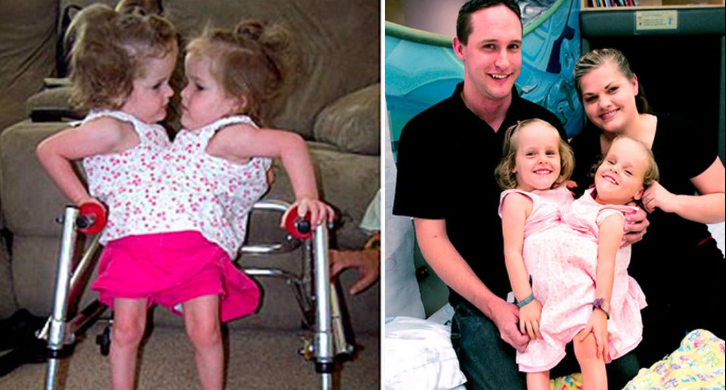
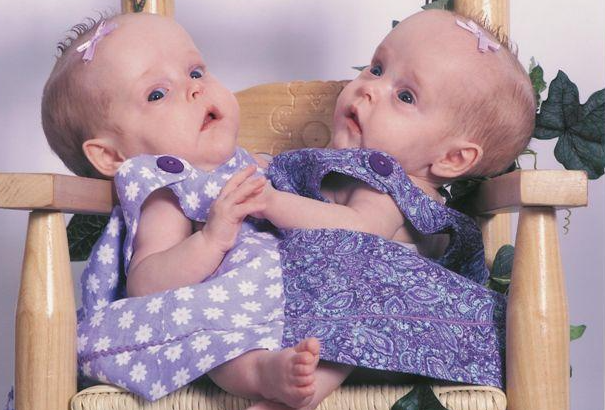
Born in Utah in 2002, Kendra and Maliyah were joined at the abdomen and pelvis. They shared a liver, a portion of their intestines, a pelvis, and a single functional kidney. Between the two of them, they had only two legs, with each girl controlling one. To cross a room, the two young girls had to demonstrate a great deal of coordination.
Before the surgery, the twins talked about what they would like to do afterward. They dreamed of sleeping in bunk beds and riding bicycles. Kendra had a very specific model in mind: she wanted a “princess” bike and hoped to be able to go fast.
Their parents, Erin and Jake, discussed the procedure with them. The family had years to reflect on what this separation would mean, while the doctors had to prepare for two separate recovery processes. The kidney was located in Kendra’s body; once separated, Maliyah would no longer be able to share it. The doctors waited until she was older and better prepared to undergo a transplant.
The operation continued throughout the night.
In August 2006, the young girls were taken into the operating room at Primary Children’s Medical Center in Salt Lake City. The medical team had to separate their shared organs, reconstruct each child’s pelvis, and close the surgical incisions. Each sister kept the leg she had always controlled.
By the end of the evening, the twins were physically separated. Many long hours of reconstructive work still lay ahead. The following morning, Maliyah was moved to intensive care. Once the procedure on Kendra was complete, the surgeons placed her bed next to her sister’s. The operation had lasted approximately 26 hours.
In September, family, friends, and neighbors welcomed the girls home, carrying balloons—purple ones for Kendra and yellow ones for Maliyah. The twins were eager to see their new beds. Before long, Kendra began playing on the computer, while Maliyah went out in a stroller. Both girls spent time playing with their younger brothers.
Returning home, however, meant undergoing rehabilitation sessions, hospital visits, and—for Maliyah—dialysis three times a week. Another surgery was already scheduled.
Eight months later, their mother also had to undergo a surgical procedure.
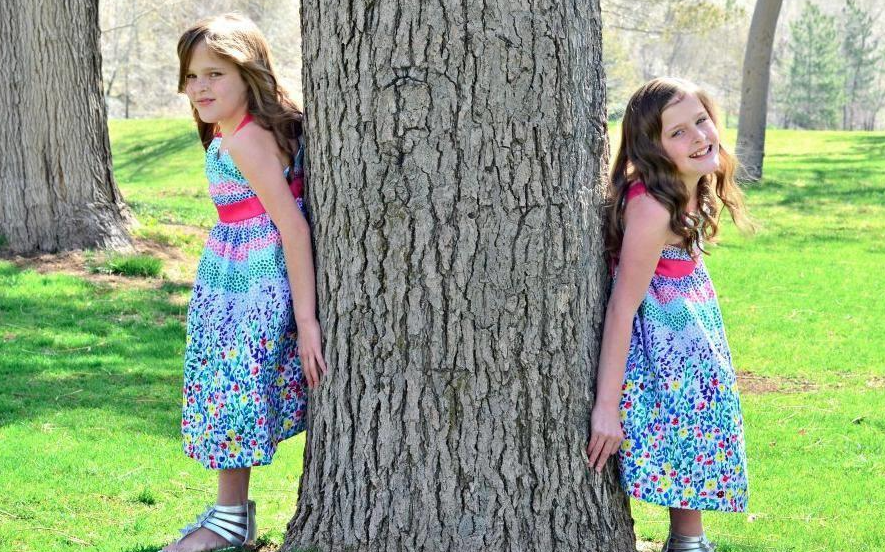
On April 3, 2007, Erin donated her right kidney to Maliyah, who had just turned five. Erin was the first to return home, while Maliyah remained in the hospital to continue her recovery and allow doctors to adjust her medication. Later that month, she was also able to go home.
The kidney functioned for several years. When it eventually stopped working, Maliyah had to resume dialysis. In an account shared in April 2018, the family described two years marked by waiting and repeated medical treatments. In May of that same year, Maliyah underwent a second kidney transplant. According to the family, the surgery went even better than expected.
Each sister had her own story to tell.
Throughout their childhood, both girls underwent additional surgeries and learned to move around independently. In 2010, a journalist filmed Kendra working on her balance while using a new prosthetic leg. The same report showed Maliyah jumping on a trampoline at their home. Each sister had her own unique way of getting around.
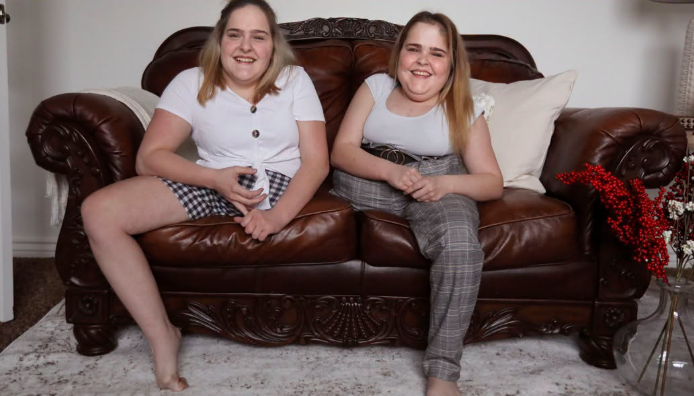
By 2019, they were in their final year of high school. In an interview with the *Deseret News*, they discussed disability, inclusion, and how it felt when strangers took their photos without permission. They recalled an incident at Disney World where a man had photographed them. The trip had been organized by the *Make-A-Wish* foundation; years later, that encounter remained one of the memories they carried with them from the visit. Before the surgery, Kendra was asked what she wanted to do once she and Maliyah were separated. The adults were thinking about dialysis, reconstructive surgeries, and recovery. Kendra, however, was thinking about a princess-themed bicycle. She wanted to see how fast she could go.
PART 2: LIFE BEYOND THE MEDIA
Years later, the little girl who dreamed of a princess-themed bicycle obtained her driver’s license.
In a December 2019 interview with the *Deseret News*, Kendra shared that she had begun driving. As both sisters approached adulthood, independence became a practical matter: how would they get around, manage their medical equipment, and make more decisions for themselves?
Kendra also earned a certification as a phlebotomist and was considering a career in blood collection. Maliyah was still deciding what she wanted to do.
There was room for both paths.

After a childhood marked by so many medical decisions, the choice of their own future was not something that should be dictated by someone else’s timeline.
Their differences also manifested in more subtle ways. They did not share the same tastes in food, nor the same preferences regarding where to eat with friends. Maliyah liked spaghetti; Kendra did not. Their shared history never implied identical tastes.
The same interview mentioned a circle of close friends and emphasized that the sisters preferred to be asked respectful questions rather than be stared at. They wanted people to ask for permission before bringing up the subject of their bodies, rather than viewing their own curiosity as an invitation to take photographs.
Deseret News
These details deserve to be highlighted, just as much as the account of their surgery.
A medical milestone can be measured in hours. A life cannot.
A life unfolds through friendships, schoolwork, evolving projects, and decisions that may seem mundane—until the moment comes when significant effort is required to bring them to fruition.
When reading such a story, it is easy to find oneself admiring the surgeons, the parents, and the determination required to keep moving forward. All of this is an integral part of the story. But admiration also implies something on the part of the person doing the admiring.
How do we behave when a person with a visible disability enters a room?
Do we speak directly to them? Do we give them the choice of what they wish to share? Are we capable of accepting that they might simply want to finish their meal, enjoy an outing, or spend time with a friend? Respect is often expressed in small moments, away from prying eyes, and requires no grand, dramatic gestures.
We can put away our phones. We can introduce ourselves. We can listen—without demanding a story in return.
And we can make room for uncertainty. A young person should be free to envision a career, change paths, or simply not have an answer yet. Surviving a difficult childhood does not mean one must already have the rest of their life mapped out.
The childhood wish for a “princess bike” is touching because it is universally relatable; a child imagined something she wanted to try.
This wish offers the reader a meaningful conclusion—and a better starting point for the next time they encounter someone whose body differs from their own.
Start with the person.
Let them decide how much of their story they wish to share next. PART 3: THE KIDNEY HER FATHER COULD NOT GIVE HER
Maliyah’s father’s kidney was not a match.
Even so, he donated a kidney.
Behind the autonomy mentioned in the second part lay another chapter, taking us back to 2018—before driver’s licenses and conversations about life after high school.
Maliyah needed a second kidney transplant.
Her mother had already donated one. This time, it was her father, Jake, who would step in to help—though in a different way. As the *Deseret News* later reported, he took part in a kidney exchange chain: his kidney went to another recipient, while Maliyah, in turn, received a compatible kidney from a third party.
In this way, a father’s gift extended beyond the bounds of his own family.
And a gift from someone else made it possible to help his daughter.
*Deseret News*
It is easy to summarize this arrangement in a few sentences. Yet, those few words cannot fully convey the significance of what it meant for those awaiting a procedure.
For the Herrin family, that wait had already lasted for years.

In an update posted in April 2018, the family shared that Maliyah had returned to dialysis after the kidney donated by her mother stopped functioning. They had spent two years waiting for another transplant.
Then, on April 2, they learned that a kidney had become available.
Upon sharing the news, Maliyah revealed what she hoped would change.
“I feel like I’m going to be free,” she said.
She wanted to spend more time with her friends and family, to be able to swim, and to have enough energy to enjoy it all.
This was the future she envisioned.
There is something profoundly moving—in its very simplicity—about such a wish. To swim. To see friends. To have energy left to devote to the people you love.
Things that some might take for granted in their daily lives can, for others, become the very heart of their hopes.
The announcement also included a request: the family asked that the donor’s anonymity be preserved.
While expressing their relief, they were careful to respect the privacy of others.
Readers needed neither a name nor a photograph to grasp the full generosity of this gesture. herrintwins.blogspot.com
By May, the waiting had given way to preparations.
According to information shared by the family, Maliyah was admitted to the hospital on May 23, the day before the procedure. Initial care—including the administration of medication and medical monitoring—was begun. The following day, the long-awaited operation was set to take place. On May 26, the family shared the news: the procedure had taken place, and everything had gone even better than expected. herrintwins.blogspot.com
For those following the story from afar, this announcement might have seemed like the end of the narrative.
The kidney had arrived.
The surgery was over.
But the true significance of this news only became clear later, through the small changes the family was finally able to share.
In their July 2 update, they noted that Maliyah was recovering well. Her catheter had been removed, she was able to start swimming again, and she felt far less exhausted.
The wish she had expressed before the surgery had now become a part of her life.
This detail is worth pausing over.
A teenager had said she wanted to swim. Later, her family was able to say that she was swimming.
No elaborate explanation is needed to grasp the full importance of this.
Yet, that same July update also provided an update on Kendra. She was recovering from a surgery related to an infection and had learned to administer her own antibiotics via a peripherally inserted central catheter (PICC line). herrintwins.blogspot.com
Two sisters appeared in this family story, each following her own path toward recovery.
One was able to return to the water.
The other had to face a new course of treatment.
Their lives could not be summed up in a single sentence claiming that everything had suddenly become easy.
Good news and difficult challenges coexisted.
Perhaps that is why small details carry such weight. They help us keep sight of the actual people at the heart of a journey marked by medical milestones. They remind us that healing unfolds over the course of an afternoon, through an activity, a newly learned task, or a surge of energy—however modest it might be.
And the two sisters began to choose how these details would be shared with the world.
In March 2019, KSL featured a report on their YouTube videos. In them, they shared their own story, but also created humorous content. Maliyah, in particular, had documented her transplant and recovery. KSL.com
The camera took on an entirely different dimension.
Earlier in their journey, a stranger had used one without asking for their permission.
Now, they could choose to turn the lens toward their own lives themselves.
They were free to decide what they wanted to explain, what could be laughed about, and what they wished to share.
This choice opens a new chapter.
After being the subjects of other people’s narratives for years, what did Kendra and Maliyah want to show the public by telling their own story?
END OF PART 3
PART 4: THIS TIME, THEY CHOSE THE CAMERA
The photograph taken by a stranger had stripped them of something: the ability to decide how they were perceived by others.
Creating their own videos gave them the means to make that choice for themselves.
This brings us to the question posed at the end of the third part.
What did Kendra and Maliyah want people to see?
Sometimes, something funny.
In a report aired in March 2019, KSL described the sisters making videos about their daily lives, blending lighter, humorous content. Kendra explained that they wanted to spread positive vibes through their videos. Their father shared that this activity had boosted their self-confidence and given them an interest to cultivate.
They had something to create.
They had an audience to connect with.
And their medical journey didn’t have to be the focus of every conversation.
The same report revealed a detail that would never have made headlines back when they were first separated: they took turns preparing dinner.
After so many accounts of what doctors and their parents had done for them, here was a glimpse of what they, in turn, contributed to their household.
Dinner had to be made, after all.
Someone had to take care of it—taking turns, of course.
Their story has room for this kind of responsibility, just as it has room for surgeries and recovery. Growing up also means carrying out ordinary, everyday tasks.
The sisters also shared that they enjoyed high school, noting that they had not experienced any bullying there. KSL.com
This is an important point, as it prevents another common misconception from dictating their lives: the idea that every encounter was cruel, every classroom hostile, and every friendship difficult.
In reality, their lived experience also included a sense of belonging—a feeling that they were exactly where they were meant to be.
Furthermore, there were aspects they wished the public better understood.
In November 2019, Kendra and Maliyah took part in a live Q&A session on YouTube, alongside Gerald Nebeker from the organization Orange Socks. In his January presentation…

In a 2020 newsletter, he recalled their conversation, as well as a subsequent discussion about inclusion that took place in December.
Their advice was straightforward: speak respectfully, avoid staring at people, and show kindness.
Maliyah’s contribution could be summed up in two words:
“Be kind.” Orangesocks.org
The simplicity of this request leaves little room for excuses.
You do not need to know someone’s surgical history to treat them with courtesy.
You do not need an explanation for the presence of a wheelchair or a walker, or the absence of a limb, in order to greet someone.
And even if a person shares parts of their life online, they remain free to decide what should stay private.
A video is an invitation to watch it.
It does not, however, turn the person appearing in it into public property.
This distinction is particularly relevant to the story of the Herrin sisters: they could choose to share a personal achievement with the public, while simultaneously refusing to let a stranger photograph them without their permission.
Both choices were theirs to make.
Furthermore, speaking out publicly about inclusion did not mean that the rest of their lives was put on hold.
During their December 2019 interview, Kendra shared that she had missed the first month of her senior year of high school due to an infection that required surgery. She also spoke, with pride, about her strong academic performance.
Thus, within a single narrative, two aspects—which readers might otherwise have separated—coexisted: a student facing serious health challenges, and a student pleased with her grades. One did not negate the other.
As they approached adulthood, the sisters also reflected on the practical demands that come with greater independence. Their medical equipment sometimes required assistance for lifting heavy items. Furthermore, their medical care would need to evolve, moving beyond the pediatric hospital setting they had known for years. www.deseret.com
This new phase entailed decisions that no surgery—no matter how successful—could resolve on their behalf.
What role should support play in the life they wished to lead?
Which responsibilities could they shoulder on their own, and in what areas did they still require someone by their side?
These were questions concerning everyday life, with repercussions that extended far beyond what a camera could capture.
For years, the public followed their journey, wondering what the doctors’ next intervention would be.
Now, a different question began to emerge: what would Kendra and Maliyah choose next? The children—once photographed side-by-side in hospital beds—were heading toward a future that would require them to express themselves in a new way.
And telling their story was only the beginning.
The next step for them was to have more of a say in how they would lead their own lives.
END OF PART 4
PART 5: THE YOUNG WOMAN WHO HADN’T YET DECIDED
In 2019, Maliyah didn’t know what she wanted to do.
Years later, one would see her hands at work.
The question left hanging in Part 4—what would the two sisters choose next?—could not be answered immediately. Their adult lives would take shape through a series of decisions made at different times.
But one pivotal milestone stands out clearly in a school document.
The 2020 graduation program for Woods Cross High School lists two names:
Kendra D. Herrin.
Maliyah M. Herrin.
They appear among their classmates.
There is no mention of a transplant alongside their names, nor any explanation regarding the surgery that separated them. On this page, they are simply part of the graduating class. For a reader who first encountered them in a story about intensive care, these two lines carry a special significance.
Between those media appearances, years of schooling had passed.
Classes. Homework. The daily life of students who, at the same time, had to manage medical treatments.
And now, their names appeared in a graduation program.
This pivotal milestone brings us back to a question that Maliyah had left open-ended.
When the sisters spoke to the *Deseret News* in December 2019, Kendra had earned a phlebotomy certification and was planning to work in that field. Maliyah, meanwhile, was still searching for her path.
It would have been easy to view her uncertainty as a void waiting to be filled by someone else.
But an undecided teenager is, above all, someone who has time to explore.
As for her answer, it continued to take shape.
In March 2024, *Axios* featured Maliyah as a nail technician in Davis County, who also created beauty-related content online.
A new subject thus presented itself to the lens:
Her work.
An article published in July 2025, focusing on one of her TikTok videos, provided further clarity. It followed Maliyah through her preparations, her travels—by car or scooter—and her commute to her workplace. At the salon, the video captured tasks such as folding towels, grooming nails, and applying nail art.
These details ground the narrative in the concrete.
The young woman who once expressed a wish to have enough energy to enjoy life was now sharing a typical workday.
Viewers could observe how she navigated her day.
They could also examine her creations up close.
The article included glowing praise for her work, alongside reactions to her personal journey.
This distinction is significant.
To commend someone’s work is to acknowledge the choices invested in it—the selection of colors, the finish, the care devoted to every minute detail. It is to recognize a level of craftsmanship that demands practice.
For Maliyah, her public story now incorporated a creative dimension, one directed toward others.
While childhood photos remained a part of her past, new images revealed an adult fully engaged in her professional life.
Then, a new opportunity for public expression arose.
On August 8, 2025, Maliyah appeared as a guest on an episode of the podcast *The Beauty Connective*. The published presentation highlighted her career in nail care, her social media following, and the representation of disability within the beauty industry.
The teenager who once lacked a clear professional path could now point to concrete experience.
This does not reveal every step of the journey between those two points in time. It does not mean that every day was easy, nor that her health-related needs had vanished.
It does, however, tell us something more specific—something worth pausing to consider:
Her life has evolved, moving beyond the stage where a previous article had left her.
Readers sometimes fix a person in their memory exactly as they were when they first encountered their story. In an old photograph, a child remains a child. In an interview read years ago, a teenager remains someone still uncertain about her future.
But, in the meantime, life goes on.
As for Maliyah, she has continued to live her life.
And her evolution offered no answer for Kendra. Each sister deserved the space to make her own choices, without one becoming the benchmark for the other.
They have always been two distinct individuals.
Adulthood has provided more room for their separate paths to unfold.
Yet, public attention raised a lingering question.
When observers watch Maliyah at work, what holds their attention the longest: the story they recognize, or the skill they see before them?
Can they admire her perseverance while also noticing the quality of her craftsmanship? Can they remember what she has overcome, without it becoming the only thing they see?
The continuation of their story extends beyond the two sisters themselves.
It touches those who watch them.
For Maliyah has already placed something new before the camera.
It is now up to the audience to decide whether they are ready to see it.
THE REST OF THEIR LIVES BELONGS TO THEM
The final image of this story does not have to be one of a hospital bed.
For once, we can leave Maliyah at work.
In the video described in the fifth part, we see her getting ready, heading to the salon, and decorating nails. Anyone who remembers her as a child, waiting for a kidney transplant, can now see an adult creating something with her own hands.
Her past is still there.
So is her talent.
There is no need to choose which of the two is “real.”
This is the answer to the question left hanging: the public can hold in its memory what a person has endured, while still making room for everything else they are becoming.
For Kendra and Maliyah, that space is essential.
Their names have appeared side by side in headlines for most of their lives. Yet, each name refers to an individual whose future cannot be defined by the other’s.
Kendra.
Maliyah.
A shared beginning. Individual choices.
And neither of them owes the world a life impressive enough to justify the care she received.
Perhaps this is the most important point at which to pause.
It is tempting to conclude a story like theirs by listing achievements, one after another, until the reader feels reassured. Earning a diploma. Getting a driver’s license. Obtaining a professional qualification. Building a career. These milestones deserve to be celebrated.
But the young girls who occupied those hospital beds made no promises about who they would become.
They were entitled to care, long before anyone knew what path they would take as adults.
They were entitled to the chance to discover that for themselves. In 2020, both of their names appeared on the graduation program for Woods Cross High School. Much later, articles highlighted Maliyah’s career path as a nail technician. In a 2019 interview, Kendra mentioned her certification in phlebotomy, while Maliyah was still exploring what direction she might take.
Their lives did not unfold at the same pace, nor did they follow an identical path.
And there was no reason why they should have.
For families discovering their story, this can offer a sense of hope that is calmer and more reassuring: the future does not need to be mapped out in every single detail. Sometimes, the next step is simply acquiring a new skill. Sometimes, it is about regaining enough strength to return to an activity one misses. Sometimes, it is simply acknowledging that a choice has not yet been made.
A single life can encompass all of this.
And needing help does not strip anyone of their right to choose.
The story of the Herrin sisters is a constant illustration of this. Their parents, medical teams, donors, friends, and community are all an integral part of this narrative. The support they received helped open up new possibilities.
Yet, the choices made within those possibilities always belonged to the sisters themselves.
This is precisely what makes their small childhood wishes so touching.
Before their separation, the adults around them had to grapple with questions of critical importance.
Kendra, for her part, dreamed of a princess-themed bicycle.
Years later, before her second transplant, Maliyah expressed a desire to swim and to spend time with her loved ones and friends—without dialysis getting in the way of those moments. None of these wishes were speeches prepared to inspire strangers.
In each case, they were glimpses into what a child or teenager desired for herself.
We should take these wishes seriously.
They reveal to us what a medical breakthrough can make possible: an experience, a friendship, an afternoon that someone had longed to be able to enjoy.
They also remind us of everything that remains hidden from the public eye.
One might know the date of a surgery without being aware of the difficult nights that surrounded it.
One might watch a video without knowing the full story of the person who created it. We can celebrate a milestone without demanding updates afterward.
Following someone’s journey does not grant us any claim over how it unfolds.
Thus, this final chapter does not promise that all hardships are now behind Kendra and Maliyah. There is no need to invent a perfect future to recognize the value of the lives that have already been described.
There were two little girls who had to coordinate every single step they took.
There were two students whose names appeared alongside those of their classmates.
There were young women who spoke of work, independence, and how they wished to be treated by others.
Every moment deserves to be part of the picture.
And when we step away from that picture, we can take a concrete lesson from it.
Speak to the person.
Ask for permission before taking a photograph.
Notice the effort someone has put into learning a skill.
Offer your help without assuming you already know the solution.
Grant everyone the right to live an ordinary day, without the pressure to extract a lesson from it.
This is an attitude a reader can adopt, long after the specific details of a medical procedure have faded from memory.
At the beginning of this story, Kendra and Maliyah lay in separate beds for the first time.
Their beds were placed side by side.
Years of treatments, growth, learning, and choices lay ahead of them.
We have followed some of those years.
We cannot write the years yet to come.
But perhaps the most beautiful conclusion is one that finally grants them the space to continue their own journey, away from our gaze.
Let Kendra choose her next step.
Let Maliyah pursue her own path.
Let them nurture dreams they have yet to reveal, make plans they are free to change, and experience moments they will never need to explain.
These final words belong on this page.
A DAY THAT DOESN’T MAKE THE HEADLINES
Perhaps, in a life like theirs, the most meaningful days are the ones the world will never hear about.
Days with nothing to announce.
No hospital press releases. No interviews to grant. No need to explain a childhood photograph to someone seeing it for the first time. We do not know which days, for Kendra or Maliyah, take on this particular significance. Those moments belong to them alone.
Yet, having followed their story, we come to understand why ordinary, everyday time also deserves its place in the final chapter.
When Kendra wished for a “princess” bicycle, she was imagining an activity she could take part in.
When Maliyah wanted to swim, she was imagining a place she could go.
Their desires were specific—simple enough to be envisioned, yet significant enough to truly matter.
And it is precisely to this point that this final page brings us:
To what a person aspires to achieve during the life that so many others have helped to preserve.
Telling a story through the lens of surgical procedures might make it seem as though those years were nothing more than a series of emergencies. Describing a life solely through its successes might suggest a constant, upward climb.
The reality of a life holds far more nuance than such a view implies.
It is possible to find joy, even in the absence of any grand achievement.
It is possible to rest, without the need for justification.
It is possible to change one’s mind about what the future might hold.
Kendra and Maliyah, just like anyone else, are entitled to this freedom.
We can be grateful to them for sharing parts of their lives, without demanding that they turn every experience into a source of inspiration for others.
We can admire their perseverance without expecting them to demonstrate it every single day.
And let us never forget that being loved should never depend on one’s ability to serve as an inspiration.
This reflection extends well beyond the story of this one family. Somewhere, someone reading these lines might be comparing a difficult period in their own life to the most radiant moment in someone else’s.
Someone might be wondering if accepting help is the same as falling behind.
Someone might have just endured a grueling day, yet felt that it wasn’t worth mentioning at all.
There is no need to use the experiences of these two sisters to create a hierarchy of the hardships people face.
Their story can, quite simply, make us more attentive.
Attentive to the efforts we cannot see.
To the support that some people may need.
To the aspirations they are still free to hold.
Perhaps, the next time someone shares their plans with us, we can simply listen—without immediately trying to judge whether those plans are ambitious enough.
Going for a swim can be significant.
Learning a new skill can be significant.
An afternoon spent with loved ones can be significant.
At the age of four, Kendra and Maliyah lay in beds side by side, following the surgery that separated them. That image helped the entire world grasp the magnitude of an extraordinary medical event.
But it could never, under any circumstances, encompass two entire lives.
No photograph could do that.
No series of articles could do that.
Even these pages must, at some point, come to an end—while the lives of the people they describe continue on.
And so, we bring their story to a close with gratitude for what they chose to share, while fully respecting what they chose to keep to themselves.
There are no more ultimate trials to overcome.
There is no need for some extraordinary feat to give meaning to this conclusion.
Once upon a time, two little girls dreamed of things they had yet to experience.
Our hope is that each of them continues to discover whatever it is she wishes to try.
And that, on the days that matter most to her, there will simply be no headlines in the press.
Just a life—quite simply—being lived.
THE END